Special Correspondent
A cargo ship bound for Bangladesh was stopped by the Indonesian Navy this month with 405 tonnes of a rocket-propellant precursor on board. The seizure raises a question that neither Jakarta nor Dhaka has yet answered: who ordered the chemical, and why?
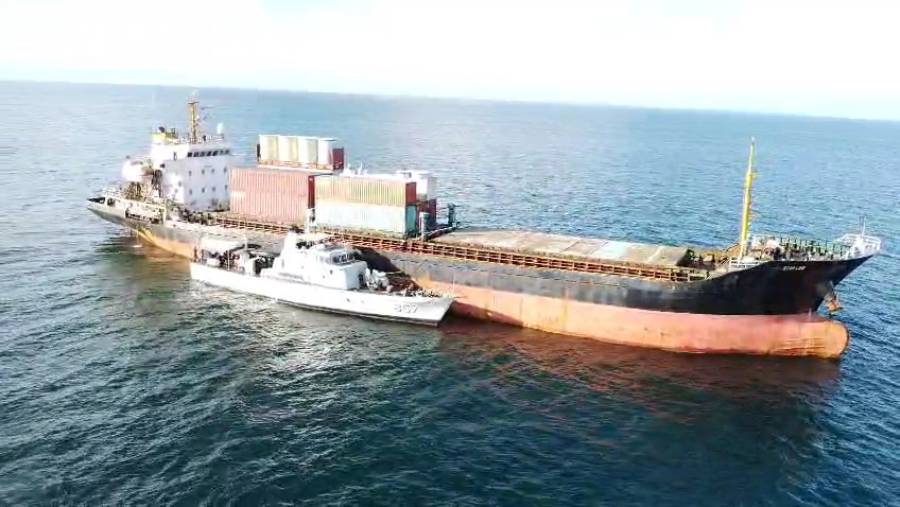
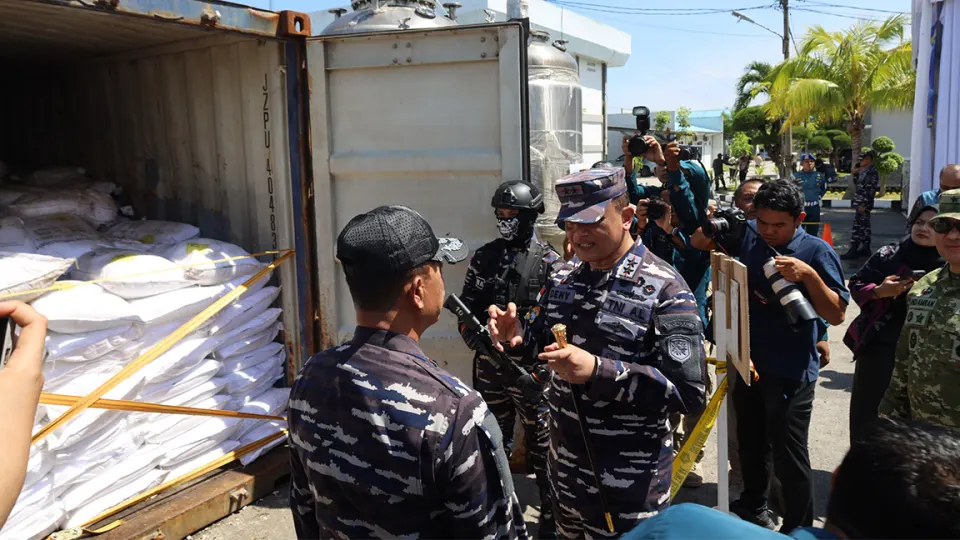
Indonesia’s First Regional Naval Command stopped the Comoros-flagged MV Star Line in waters off Belawan, North Sumatra. The vessel was flagged by a maritime-monitoring system for suspicious movements on Saturday, 7 November, and the patrol ship KRI Sigalu-857 intercepted it. Of the 36 containers aboard, 15 held the 405 tonnes of sodium perchlorate, and the ship was sailing from China to Bangladesh.
The regional commander told a press conference on 20 November that some of the ship’s administrative documents had lapsed on 8 October. That detail has not been independently confirmed. Indonesian officials have also suggested that the quantity seized could, in theory, supply material for around 100 missiles. This is an official estimate and not a finding about anyone’s intent. Bangladesh’s importer, and the cargo’s intended use, have not been made public.
Sodium perchlorate has legitimate industrial uses, but it is also a precursor to ammonium perchlorate, a key oxidiser in solid rocket fuel. That dual use explains the alarm. US lawmakers have said Chinese companies supplied Iran with roughly 2,000 tonnes of the chemical since September 2025. A deadly blast in Iran that killed at least 28 people was linked in reports to the storage of the compound. Nothing reported so far connects the Star Line’s cargo to Iran or to any military programme, and the comparison only shows why a shipment this size draws scrutiny.
For many Bangladeshis, the episode recalls April 2004. Authorities then seized ten truckloads of arms at the jetty of Chittagong Urea Fertilizer Limited. Investigators believed the weapons were meant for the Indian separatist group ULFA. The haul was widely read as proof of the region’s porous borders and of Bangladesh’s potential role as a transit point for illicit arms.
The legal aftermath is a cautionary tale. In January 2014 a Chittagong court sentenced 14 people to death under the Special Powers Act. They included former ministers Lutfozzaman Babar and Matiur Rahman Nizami and senior intelligence officials, and reports at the time said the verdict pointed to state involvement. Ten years later the High Court largely dismantled that outcome. In December 2024 it acquitted six people, including Babar and the late Nizami, whose appeal was abated after his death. It also commuted the death sentence of ULFA commander Paresh Barua to life imprisonment. Six other death sentences were reduced to 10-year terms. In January 2025 the court acquitted five people, again including Babar, in the separate Arms Act case. We found no public reporting on any further appeal, so the case’s final status is unclear.
That history is why the Star Line seizure unsettles security analysts. The most troubling feature is how little is known. A ship with lapsed paperwork and a dual-use cargo may be a case of negligence, or it may be something more deliberate, and the public cannot yet tell which. The interception also came from a foreign navy, not from Bangladeshi authorities. Had Indonesian monitoring not flagged the vessel, the chemical might have reached Bangladesh without question. And the 2004 case suggests that even when a large illicit consignment is caught, establishing responsibility can take two decades and still end without a settled answer.
The next steps are for officials to name the consignee and explain the intended end use, and for Indonesian authorities to say whether the ship’s operators will be charged. Bangladeshi customs and security agencies also face questions about how such shipments are licensed and tracked. Until those answers come, the cargo remains a warning that Bangladesh’s ports and shipping oversight may have gaps that others could exploit.