DEEPEAST NEWS, DHAKA
A political programme organised by the Jatiya Samajtantrik Dal (Jasad) in Dhaka was disrupted after police and activists of an organisation affiliated with the ruling Bangladesh Nationalist Party (BNP) entered the venue, bringing the programme to an abrupt halt on Saturday.
More than 100 people were arrested following the incident, according to reports. The sweeping arrests have raised questions about the space available for political gatherings in the capital and the extent to which participants at political programmes can be detained during law-enforcement operations.
The programme was attended by Jasad leaders, activists and supporters. According to accounts from the event, the intervention by police and BNP-affiliated activists disrupted the gathering and led to a large number of people being taken into custody.
Police said they took action after identifying people at the programme whom they alleged were activists or supporters of the banned Awami League. The authorities have been carrying out arrests of people accused of involvement with the Awami League since the party’s political activities were prohibited.
The police allegation, however, does not by itself establish that everyone detained at the Jasad programme was an Awami League activist or had taken part in prohibited political activity. The circumstances of individual arrests would have to be established through due legal process.
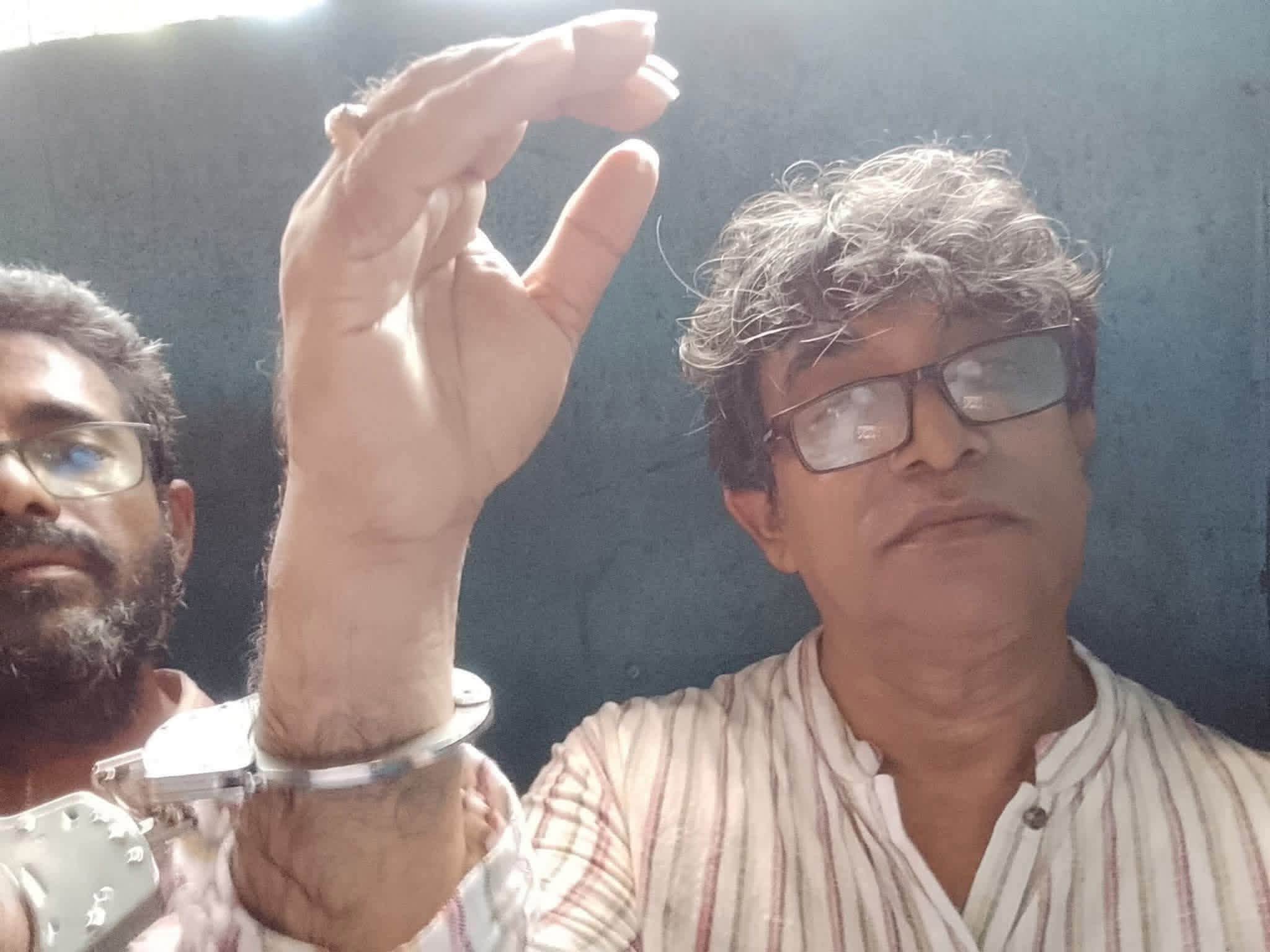
The incident has also drawn attention because the arrests reportedly included Abu Zafar Surjo, a journalist who was present to cover the programme. Photographs showing Surya handcuffed and being taken to a police vehicle have circulated widely on social media.
His detention was one part of a much broader operation in which scores of people at a political gathering were taken into custody. The episode therefore goes beyond the treatment of an individual journalist and raises broader questions about the ability of political parties and groups to organise and hold programmes without being disrupted by law-enforcement action.
Jasad has continued to operate as a political organisation despite the arrest and prosecution of some of its senior leaders. The party’s president, Hasanul Haq Inu, remains imprisoned after being convicted in a case stemming from the political upheaval surrounding the fall of the Awami League government. Jasad has described the cases against Inu and other party figures as politically motivated and has repeatedly called for his release.
The latest incident comes against the backdrop of heightened political tension in Bangladesh, where restrictions and arrests involving supporters of the Awami League have become a major feature of the country’s post-2024 political landscape. Human rights and press-freedom concerns have also emerged around the use of arrests and legal cases in dealing with political activity.
For the Jasad programme, the central issue is therefore not only who was arrested, but what the incident means for political assembly in Dhaka. A gathering organised by a political party was disrupted, a large number of attendees were detained, and a journalist covering the event was among those taken into custody.
The police’s claim that Awami League activists were present provides the authorities’ stated justification for the operation. Whether that justification applies to each of those arrested, and whether the disruption and arrests were proportionate to the alleged presence of banned-party activists, remain matters requiring clarification through the legal process.